Welcome to BL Drama Talk 💗

Reviews

🌸 BL Drama Reviews
Romance, chaos, butterflies, questionable decisions… we’re here for all of it. 💕
Sharing our honest thoughts, favorite scenes, memorable couples, and the little moments that make a BL impossible to forget. ✨
Because sometimes you just need someone who gets the BL obsession. 🫶

Is Khemjira a BL? Everything to Know About Khemjira Will Survive

Is Khemjira a BL? Everything to Know About Khemjira Will Survive 

Yes, Khemjira is a popular Thai supernatural horror Boys’ Love (BL) story that revolves around a romance tested by dark occult forces. Originally a hit web novel, the Khemjira BL adaptation has captured global attention for its unique blend of Thai folklore and romantic suspense. 

Life is unpredictable. We all know we came here with a set expiration date, but none of us knows exactly when it will arrive. That is why we simply live our lives, treasuring the moments as they come: school, college, family time, love, marriage, children. No one can guarantee how much of this we have been blessed with, or how much we will get to experience, because our final hour is a secret.

What if you did know? If you knew your departure date, could you still live a normal life? Could you still make friends, fall in love, or enjoy joys? Just thinking about it feels suffocating, doesn’t it?

This is the story of a boy bound by a centuries-old family curse. Generation after generation a dark legacy followed his bloodline: every single boy, in his family was destined to die the year he turned 21.

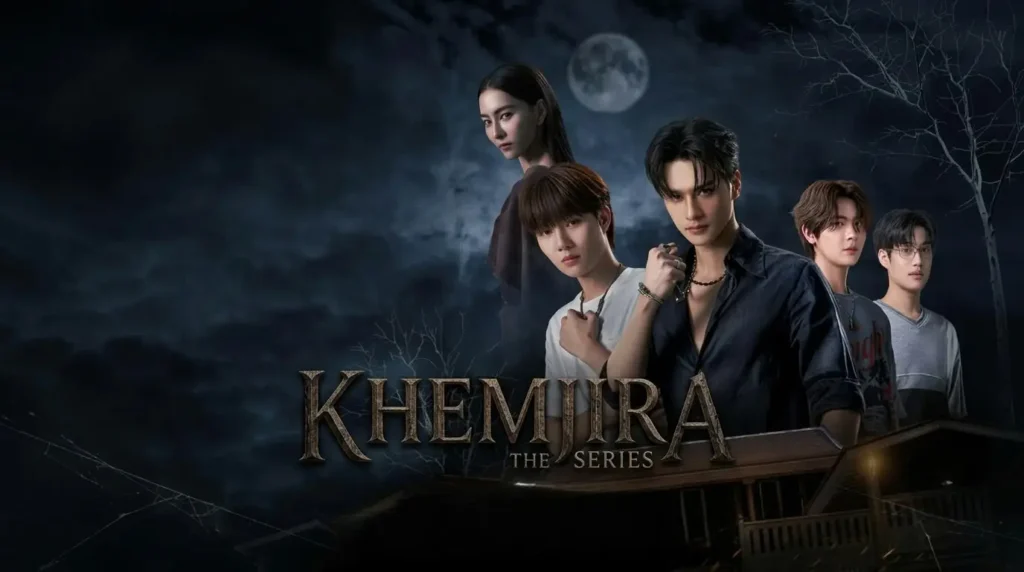
To me the cast of Khemjira is one of its special features because Namping Napatsakorn Pingmuang playing Khemjira and Keng Harit Buayoi playing Pharan made Khemjira and Pharan seem far more real than I had expected.

I never really expected when I first started watching it that the series would be connected to the characters in that way. I had assumed I was going to be seeing another kind of supernatural BL, but Khemjira has given me something which seems a great deal more personal. The story includes family curses, ghosts, horror, fate, friendship, mystery and right in the midst of all that darkness there is a romance that gradually develops between two people who definitely shouldn’t have had an easy path.

Is Khemjira a BL? Main Characters, Cast

The more I watched them together, the more I grew attached to their story. There’s a certain quality about the way they are connected which seems entirely natural. It doesn’t appear as though their relationship has been included just because Khemjira is a BL drama; on the contrary, it becomes a significant element of Khem’s journey, touching upon his fears, his emotions, and all that he is attempting to understand. That is one of the reasons why their relationship seemed so important to me and why I became so involved in the story.

What is Khemjira about?A Chilling Tale of Fate, Sorcery, and Survival 

Can a name change destiny? Is blood fate fixed? In the Thai horror-fantasy book and its TV adaptation, Khemjira Must Survive, a young character named Khem deals with a terrible truth: a dark family curse says that every male in his family will die before turning twenty-one.

Khem’s mother wants to protect her son from the force that is hunting their family. She names him Khemjira, which’s a name usually used for girls. The name means ” safety” and was meant to trick the bad prophecy. For a time the trick works.. As Khem gets closer to his big twenty-first birthday the trick stops working. The supernatural problems around him become more and more common and more and more scary.

Khem is pushed to the edge of living when he meets Pharan, a shaman who pays attention to the hidden world of Buddhist white magic. At first Khem asks for help to be safe.. This turns into a strong connection between Khem and Pharan. Together Khem and Pharan go on a journey that uncovers the real start of the family curse. Khemjira is different from supernatural love stories because Khem is the main reason. Khem is not a hero looking for love. Khem is a survivor fighting for life. Khem’s story is a look, at control. It shows a man who is trying very hard to take back a future he never asked for from the grip of an old terror.

What makes this story stand out is the fact that Khem is not only seeking love but is also trying to stay alive. Because he is haunted by a deadly family curse which causes every man to die before the age of twenty-one, he is always afraid of what the future holds. Meeting Pharan, a strong and reliable shaman who understands the supernatural world, brings about a change. Their relationship goes far beyond simple chat or ordinary romantic scenes; instead, they develop a deep emotional bond based on survival. Pharan is patient and protective, taking the time to win Khem’s trust rather than rushing into a romantic relationship. The contrast between Khem’s vulnerability and Pharan’s strength gives their developing relationship a truly realistic and powerful feeling. 

For every Boys’ Love (BL) fan, it is beautiful to watch their relationship develop since the stakes are so great. For Khem, falling in love involves much more than simply experiencing a new emotion; because of his curse, to love Pharan means having to gain the courage to believe that he might actually have a future. Pharan stands for safety, hope, and a life that goes beyond the terrifying prophecy of his family. This is the reason why their love story is so special and significant—it’s not simply about two people getting on with each other, it’s about a young man finding the hope to struggle for his own future.

Apart from the romantic aspect, I would also like to note that the main character in Khem has an incredible support system. Jet is not his only friend, as Khem also has Chan. Their friendship brings out a more positive side of the protagonist, which highlights that Khem is much more than a cursed person. In my opinion, BL dramas are great in terms of focusing on the development of the relationship between the main characters and building friendship and trust between them before the actual romance begins. Khemjira did an incredible job in this regard. Moreover, the supernatural aspect is also great, as the series does not shy away from depicting ghosts, various rituals, reincarnation, and family drama. Even if someone does not enjoy supernatural genres, the blend of supernatural and romance elements is perfect in this drama. The relationship between Khem and Pharan is also great in terms of showing that the latter is not always here to save the former. Both characters keep a certain distance from each other during the early stages of their relationship.

Pharan clearly does not want to become too involved in Khem’s situation. He knows about the fate that has followed Khem’s family for years, but he believes that this is something Khem has to deal with on his own. Because of that, Pharan tries not to interfere. He keeps a certain distance from Khem, even when it is obvious that something about him is already starting to affect him.

At first, his behaviour can feel a little cold. He does not make it easy for Khem to get close to him and he tries to keep control over the situation. But as the story moves forward, we start to see that his distance does not mean he has no feelings for Khem.

Actually, it feels like the opposite.

Pharan cares about Khem much more than he wants to admit.

That is exactly what makes Pharan such an interesting character to me. He starts showing how he feels through what he does, even before he is ready to admit those feelings to himself. He keeps an eye on Khem, worries about him and gradually finds himself stepping in whenever Khem needs someone. Even when Pharan says he does not want to get involved, the way he behaves tells a very different story.

And then comes their first kiss.

I really liked the way Pharan pulls himself back instead of simply letting the moment continue. To me, it feels like he stops because he understands that going any further would mean facing feelings he has been trying to keep under control. He wants to stay in control of the situation, but at the same time, he is also struggling to control what he feels for Khem.

What happens the next day makes that moment even more meaningful. There is an obvious awkwardness between them, but there is also this feeling that they both know something has changed. Things cannot quite return to how they were before.

When they eventually move toward another kiss, the moment feels different to me. This time, Pharan is not simply caught up in what is happening. He is slowly beginning to accept what he wants and make his own choice.

That gradual change in Pharan is honestly one of my favourite parts of their relationship.

In the beginning, Pharan refuses to help Khem because he believes he should not interfere with Khem’s karma. He tries to stay away from Khem’s problems and convince himself that keeping his distance is the easier thing to do. But the more time he spends around Khem, the harder it becomes for him to keep pretending that he does not care.

But it does not.

Little by little, Pharan becomes involved anyway.

He starts helping Khem in ways that may seem small at first. Then those small moments become something bigger. The man who once insisted that he should not interfere is suddenly the person standing beside Khem when he needs someone.

And the beautiful part is that Pharan does not seem to realise exactly when that change happens.

His feelings slowly become stronger than the rules he had set for himself.He can no longer simply tell himself that Khem’s fate is not his concern. He starts choosing Khem, even when doing so means getting emotionally involved in something he originally wanted to avoid.

There is also something deeper connecting them. As the story unfolds, the connection between Khem and Pharan begins to feel bigger than what is happening in the present. Their past-life connection adds another layer to their relationship, making their meeting feel less like a coincidence and more like two people finding each other again.But what makes this especially meaningful to me is that Pharan still takes his time.Even if fate has brought them together, he does not simply surrender to it. He watches Khem, understands him, struggles with his own feelings, and eventually makes the choice to stay.And that is why I think their romance works so well.Yes, there is fate involved. Yes, their past connects them. But Pharan still has to choose Khem.He chooses to help him.He chooses to stay close.He chooses to stop running from what he feels.And eventually, he chooses Khem.That is what makes their relationship feel much more than a simple supernatural BL romance. We get to actually see Pharan’s feelings change through his actions. He starts by keeping Khem at a distance, then slowly becomes someone Khem can depend on, until the distance he once tried so hard to maintain is no longer possible.

Pharan took his time, and honestly, I think that made their relationship even sweeter.

Would I Recommend It? Is Khemjira a BL Worth Watching?

Yes, I would.

If you enjoy Thai BL dramas with supernatural elements, ghosts, mystery, romance, curses, and emotional stories, I would definitely say give Khemjira a try.

Just keep in mind that it is not only a soft and fluffy BL. There are darker parts involving death, horror, violence, fear, and emotional pain.

When I started watching Khemjira, I mainly wanted a supernatural BL. But as I continued watching, I became more attached to Khem, Pharan, and the people around them. I really wanted Khem to have a happy life and a future where he did not have to constantly live in fear. And of course, I wanted Pharan to be part of that future.

For me, though, there is something I always keep in mind when watching BL dramas.

I don’t really feel that I am the right person to say that a drama is “bad” or “perfect.” There are so many people behind every drama who spend months or even years working on it. The actors, directors, writers, crew, and everyone else put their time, effort, and heart into bringing that story to life. Who am I to decide that all of that work is simply good or bad?

So, for me, my answer will almost always be yes; I would recommend it.

That does not mean that everyone will enjoy every BL drama. We all have tastes and what touches me may not touch someone else in the same way. My opinion is simply my experience as a viewer, nothing

With Khemjira I personally became attached, to the characters and their journey. That is enough for me to say that I would recommend giving Khemjira a chance.

For me every BL drama has something that makes it special. Sometimes it is the story sometimes it is the characters sometimes it is the emotions. Sometimes it is simply the feeling I have while watching it.

Khemjira gave me that feeling.One thing I really enjoyed about Khemjira was the way the scenes looked and felt. The drama has romance, supernatural moments, mystery, and emotional scenes, so I liked how the visuals changed with the mood. Some shots were so beautiful that I actually found myself stopping for a moment just to take them in.

One scene that really stayed with me was when Khem finally sees the tattoo on Pharan. For me, it wasn’t just about seeing the tattoo itself. The way that whole scene was filmed made the moment feel much more important. It made me curious about what the tattoo meant, why it was there, and what it could mean for Khem and Pharan. It was one of those moments where I just wanted to keep watching and find out what would happen next.

I also liked how the camera takes its time with the moment of rushing through it. The framing, lighting and close shots make Pharan feel more mysterious. There is something symbolic about seeing the tattoo on Pharan especially because so much of Pharan’s character is tied to things that are not explained right away.

The director also uses these details to make us look at Pharan differently. Before we know everything about Pharan we are given pieces through Pharan’s expressions, Pharan’s body language, the way Pharan reacts to Khem and details like the tattoo. It makes you want to pay attention because you feel that there is a story, behind what you’re seeing. Honestly, I loved that.

The cinematography does not always need a big dramatic scene to make an impression. Sometimes it is a close-up, a quiet look, a change in lighting, or one carefully placed detail that makes a character feel more interesting. With Pharan, those choices help build that mysterious feeling around him while also making his softer moments with Khem stand out more.

That is one of the things I appreciated about Khemjira: the visuals are not only there to make the series look beautiful. They also help create the feeling of the story and slowly reveal more about the characters.

Where to Watch Khemjira?

If you want to watch Khemjira, the series can be found on iQIYI, WeTV or Netflix depending on your region. Availability and subtitle options may differ by country so it is useful to check your platform before you start.

For me Khemjira is the type of BL that is best watched when you can sit down and fully enjoy its atmosphere. Khemjira has romance. Khemjira also has supernatural elements, a mystery about Khem’s fate  and many small moments between Khem and Pharan that make you want to keep watching.

I really liked the way Khemjira was directed because the story has quite a few different things going on. It is a BL but it is not only about the romance. There is the curse, the supernatural world, family history, past connections, rituals and all the mystery surrounding Khem.

The direction gives these parts enough space without completely taking away from the relationship between Khem and Pharan.

What I especially enjoyed was the way Pharan’s character was handled. He is not someone who explains everything immediately. A lot of what he feels comes through his actions, his expressions, and the way he slowly changes around Khem. You can actually feel the difference between the Pharan we meet at the beginning and the person he becomes as his feelings for Khem grow.

My Final Thoughts on Khemjira 

Khemjira is not about the curse or the supernatural mystery or even the romance. What really lingers is watching Khem and Pharan slowly grow closer and find their way, toward each other.

At first, Pharan tries hard to keep his distance. He believes Khem must face his fate and that he should not get involved. He keeps telling himself that staying away is the thing to do.

The more time he spends with Khem the harder it becomes to hide how much he actually cares. Even when he does not say much his actions slowly start showing what he is feeling.

That slow change is what makes Khem and Pharans’ relationship so special. Their connection does not happen at once. It grows naturally through the things they do, the moments they share, and the way they slowly begin to understand each other.
The Edge of Horizon: Plot, Cast and Spoiler-Free Plot Summary

The Edge of Horizon: Plot, Cast  and Spoiler-Free Plot Summary

The Edge of Horizon is a historical Thai melodrama set in Siam during the revolution of 1932, dealing with the themes of love, class, duty and a changing society.

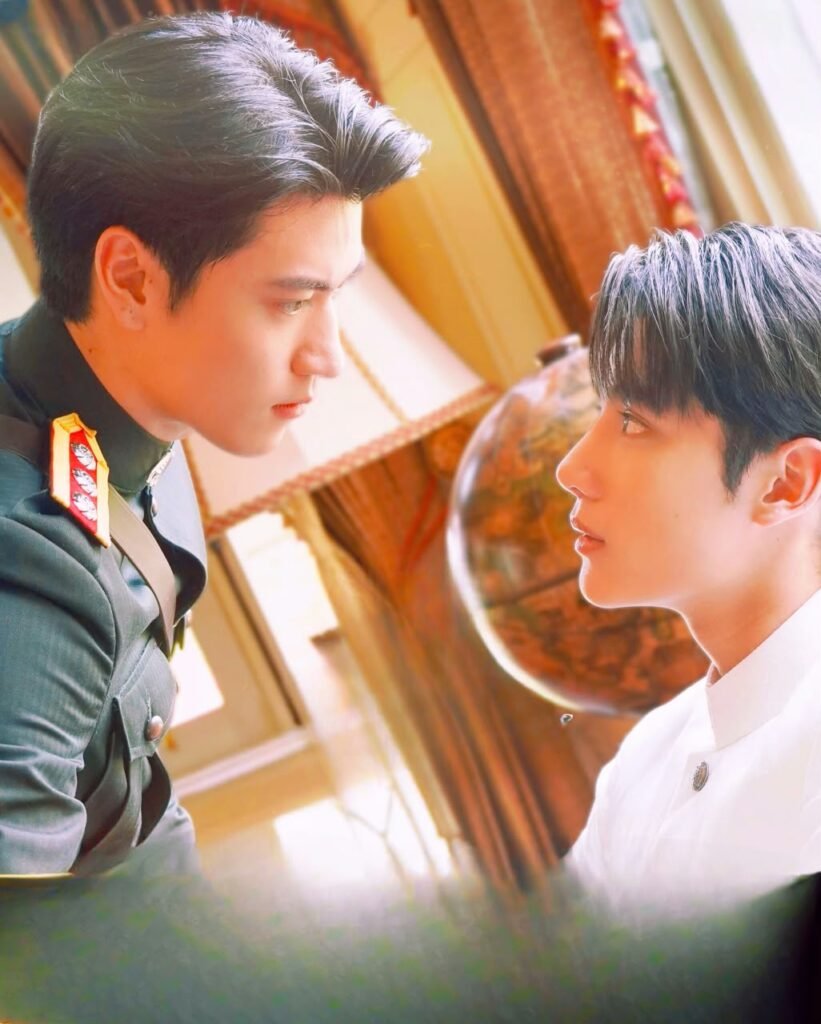
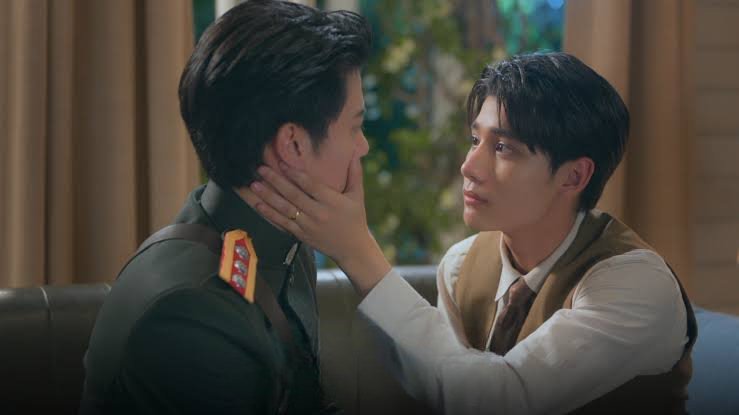
The story centres on Thinnakon, known as the “Little Prince,” and Phob, the son of his nursemaid, who have a close relationship when they are children. This innocent bond develops into a more serious one, but the rigid traditions of palace life and the huge gap between their social statuses ultimately cause them to be separated.

Many years later they come together again when both of them are adults in a kingdom which is going through major political and social changes. Thinnakon has now become a prince and is under the burden of royal expectations, whereas Phob wishes to lead a life outside the confines of the palace. When their paths meet once more, the emotions from their past start to return.

However, due to the presence of status, duty, tradition, and a changing nation between them, their relationship is by no means simple.

‘The Edge of Horizon’ combines historical bl drama, forbidden romance, differences in social class, and emotional tension to present a tale of two individuals who are striving to find their place in a world which may not let them freely choose love.

A love influenced by the past, confronted by the present, and put to the test by a changing world. 🌸

Prince Thinnakon The Edge of Horizon

Character Name – Thinnakon  

Real Name:- {Ongsa Theetat Khummuang}    

Official instagram – @ongsacelcius]

Thinnakon, who is commonly known as the “Little Prince”, has grown up in an environment of privilege, but the royal lifestyle also involves expectations which he cannot easily escape. He has always been close to Phob, a relationship which becomes more difficult to manage as they get older.

Under his calm exterior there lies a person who is striving to work out what he genuinely wants out of life. Thinnakon has to reconcile his responsibilities with feelings which never always fit well within the world he was born into. The position he holds with Phob adds another aspect of conflict, particularly when his personal emotions come into conflict with family expectations and social boundaries.

The character brings an emotional dimension to the story and illustrates just how difficult it is to decide between sticking to the path that has been laid out for you and listening to your own heart.

====================================================================================================

Phob The Edge of Horizon

Character Name– Phob  

Real Name:- { Inn Jakkrasin Atsavatanachai }

Official instagram – [@innjkrsn]

Phob grew up close to the palace because his mother worked there as a nursemaid. That childhood connection brought him into Thinnakon’s world from an early age, and the two developed a bond that stayed with them as they grew older. At the same time, Phob never completely forgot that he came from a very different background. Time eventually takes him away from the palace and into a completely different life. When Phob returns years later as a military captain, he is no longer the boy Thinnakon once knew. He carries himself with greater confidence and has experiences of his own that have shaped the person he has become.

Yet, despite the distance and everything that has changed between them, his feelings toward Thinnakon haven’t simply disappeared. His return brings those old emotions back into the story and makes their relationship much more complicated than it was in childhood. 

Supporting Cast & RolesCharacter Name- 

Character Name – Chat —

Real Name:- {Pond Ponlawit Ketprapakorn / ปอนด์ พลวิชญ์ เกตุประภากร}

Official instagram – @pondponlawit

Chat is a key royal figure in the story. His actions and strong beliefs create significant tension within the palace’s power dynamics. As the political revolution moves forward, his decisions heavily influence the lives of both Thinnakon and Phob

===========================================================

Character Name– Prince Vasin Varakulvathin —

Real Name:- {Chai Chartayodom Hiranyasthiti / ชาย ชาตโยดม หิรัณยัษฐิติ}

Official instagram – @chartayodom

Prince Vasin is Thinnakon’s father and a prominent senior royal figure. He is deeply caught in the crosshairs of the historical revolution, trying to protect his family and legacy.

===========================================================

Character Name– Nual 

Real Name:- {Mam Kathaleeya McIntosh / แหม่ม คัทลียา แมคอินทอช}

Official instagram – @mcintosh

Nual is Phob’s loving mother and a foundational palace worker. Her choices and deep ties to the royal household heavily influence the upbringing and future decisions of both Phob and Thinnakon.

===========================================================

Character Name– Princess Ruethaisiri / Siri —

Real Name:- {Prim Prinda Techaiya / พริม ปรินดา เตชะอัยยา}

Official instagram – @prinda_techaiya

Princess Ruethaisiri (Siri) is a key female royal character. Bound by the strict traditions and expectations of the palace, her presence adds emotional depth to the family dynamics.

=====================================================

Character Name– “Jan” Janthorn 

Real Name:- {Plengkwan Nattaya Thongsaen / เพลงขวัญ นัตยา ทองแสน}

Official instagram – @plengkwan.n

Jan is a crucial supporting character whose interaction with the main leads brings a fresh perspective to the changing social structure outside the palace

===========================================================

Character Name– Patthamapriya 

Real Name:- {Eed Duangjai Hathaikarn / อี๊ด ดวงใจ หทัยกาญจน์}

Official instagram – (Not Available)

Patthamapriya is a senior traditional figure within the household. She represents the old customs and strict royal boundaries that the younger generation is trying to navigate.

Conclusion & Quick Watch Guide

The Edge of Horizon (Arun Rung) features a phenomenal cast that brings the heavy emotional and historical layers of this 1932 Siamese Revolution story to life. The undeniable chemistry between the main leads and the gripping performances by the veteran supporting actors make this a must-watch historical Thai BL drama.

Frequently Asked Questions (FAQs)

Q1: Where can I watch The Edge of Horizon legally?

Ans: You can watch the full series officially with English subtitles on GagaOOLala or through the One31 app (depending on regional availability).

Q2: How many episodes are there in The Edge of Horizon?

Ans: The drama officially completed its run with a total of 11 episodes.

Q3: Is The Edge of Horizon based on a novel?

Ans: Yes, The Edge of Horizon is adapted from the popular Thai BL novel “Arun Rung” (อรุณรุ่ง) written by the acclaimed author LazySheep.

Q4: Will there be a Season 2 of The Edge of Horizon?

Ans: As of 2026, One 31 and The One Enterprise have not officially announced a second season. The 11 episodes fully adapt the main storyline of the original novel, making a sequel unlikely.

The Edge of Horizon Ending Explained: Prince Thin & Phob's Fate

The Edge of Horizon Ending Explained: Prince Thin & Phob’s Fate

Ever since I became a Boys’ Love (BL) drama fan, something shifted within me. I found myself completely lost in the beautiful, soft romanticism of these shows. For me, BL dramas are not just a passing entertainment trend. They taught me how to trust in love again and opened my eyes to the absolute depth and purity of unconditional affection.

The Misunderstood Genre & A Changing World 

Sadly, many people still view BL dramas through a narrow, judgmental lens. They miss the pure, soulful connection that these stories carry at their core. But change is finally happening. People are starting to understand, accept, and appreciate the emotional maturity of these narratives. It took a long time for society to adapt to this shift, but seeing this acceptance bloom feels like a personal victory for every fan out there. BLTalk became a place for me to talk about BL dramas, share my thoughts, and express the feelings these stories bring out in me. 

Yet, as the world becomes more progressive, my mind often wanders into the shadows of the past. I frequently found myself stuck with a heavy, lingering question: “What happened back then, when the world wasn’t this advanced? When there was no freedom, no social media  and no legal support for love? Did those people have to forcefully erase their true love from their hearts? How did they survive that silent, aching pain? Did they scatter away into unhappy arrangements, or did they live their entire lives completely alone?” 

These thoughts honestly used to break my heart. I tried making up answers just to comfort myself, but my heart remained restless. The closure felt incomplete.

And then, The Edge of Horizon came into my life. It felt like this BL drama had arrived just to become a little piece of peace for my heart.When everything in my life felt scattered, and the lack of closure left me with this strange restlessness, this show came along and somehow held my hurting heart together. Tinnakorn and Phob’s story became more than just a drama for me. It became a kind of healing.

Watching their deep, quiet love for each other felt like someone was finally understanding the pain I had been carrying inside. Their relationship wasn’t loud or perfect. There was so much left unsaid, so many emotions hidden behind their eyes, and somehow that made it feel even more real to me.

When I had truly lost the feeling of peace in my heart, the emotional scenes and the honesty in their eyes somehow made me feel calm again. There were moments when I wasn’t even thinking about my own problems anymore. I was simply watching them, feeling their emotions, and letting myself get lost in their story for a while.

This series taught me that sometimes closure doesn’t come from the outside. Sometimes, you have to find it within yourself. And sometimes, you find a little bit of that peace in another person too—the same way Tinnakorn and Phob found a sense of comfort in each other’s hearts, even in the middle of all the chaos, pain, and revolution surrounding them.

It might be for that reason that  The Edge of Horizon had such a strong effect on me. I was not merely watching yet another romance being played out on my screen; I felt a sense of understanding from Tinnakorn and Phob, which helped me when my mind at the time was full and exhausted. Each time things around me seemed overwhelming, I could go back to their story and, for a short time, forget about the burden I was carrying.

That is probably the reason why some drama BL  become so close to us. We might initially start watching them because of the characters, the romantic element, or just because the story attracts us. Yet at times we begin to associate our own emotions with what we are seeing without even realising it. After the drama has ended, these feelings do not simply vanish. It can happen that a particular scene, a character, or even a minor moment will suddenly make all of it come back to us.

To me, Tinnakorn and Phob became that. I didn’t just watch their story and then move on from it; it became linked with a specific chapter of my life, which is why it still has such a special place in my heart.

 The Edge of Horizon (also known as Arun Rung) came into my life. Set against the turbulent, historic backdrop of the 1932 Siamese Revolution, this Thai BL masterpiece adapted from the popular web novel follows the breathtaking yet heartbreaking story of Prince Tinnakorn (played by Ongsa Theetat) and Phob (played by Inn Jakkrasin), the nursemaid’s son. Directed by Oh Kathadeb and produced by One31, the narrative perfectly dissects a love divided by royal duty, rigid class hierarchies, and historical upheaval everything society forbade. 

One of the things that I like most about The Edge of Horizon is that, despite the vast differences between them in terms of status and wealth, Phob (Inn Jakkrasin) and Prince Tinnakorn (Ongsa Theetat) never seem to view each other as more than a pair of individuals who cannot imagine living without the other. This brilliant subversion of the traditional class-divide trope protects the purity of their romance; rather than internal doubt tearing them down, it is entirely the world around them and the intense socio-political barriers of the era—that endeavors to keep the two men apart. 

Honestly, Tinn’s story is the perfect example of where endurance and actual change come from. Sometimes you just have to break away from everything you’ve ever known to figure out who you are. And that’s exactly where he’s stuck. He’s completely torn between the only life he’s ever known his family his loyalty to his country and this guy he’s suddenly falling for. He’s basically had it drilled into his head his whole life that his family’s fate and the system rest on his shoulders. He used to genuinely believe in all those rules, but now? He’s finally starting to question the actual motives behind it all 

What makes The Edge of Horizon so heartbreaking is not just the conflict between Phob and Tinn, or how hard their path to a happy ending turns out to be. The deeper sorrow stems from how the story depicts change, equality, power, and the pressure to fit in.

Even when people strive for a better and more equal world, change can grow complicated once those involved start sacrificing their principles. Some people join a movement hoping to bring about change, only to end up craving power for themselves.

That is precisely what gives The Edge of Horizon such an emotionally heavy feel. The story implies that standing up to injustice is not always sufficient people must also take care not to turn into part of the very system they once hoped to change.

So for Phob and Tinn, the struggle is about far more than simply reaching their happily ever after. Their relationship unfolds in a world where love, equality, power, and social expectations are constantly colliding, which makes their journey all the more meaningful and painful.

The Edge of Horizon Ending Explained: Phob and Tinn’s Relationship

Phob never asks Tinn to choose between their love and the fight for change. Instead, he shows through his actions that Tinn and their relationship are worth fighting for, even when doing so comes at a personal cost. His love for Tinn becomes one of the reasons he is willing to stand against injustice and fight for a different future.

At the same time, Phob’s devotion is complicated. He is willing to challenge injustice when it threatens his chance to be with Tinn, but he is also willing to humble himself before the man he loves. Whether that makes his devotion completely healthy is open to interpretation, but it clearly shows how deeply Tinn influences Phob’s choices.

Phob is also not the only person responsible for the change happening in The Edge of Horizon. The rebellion is much bigger than his individual story. Other people are fighting for change for their own reasons, and the movement would continue even without Phob. Because the story follows his perspective so closely, however, his choices naturally feel like a major part of that larger struggle.

Phob and Tinn fight for a love that society refuses to accept easily, and that constant scrutiny becomes part of their struggle. For Phob, the conflict goes even deeper because he feels responsible for helping bring down a system that his community once valued.

His goal was never simply destruction. He wanted to change that system so he, Tinn, and others could live openly, express who they truly are regardless of social status, and love without being controlled by society’s expectations. But every time someone he loves suffers because of those changes, Phob begins to question whether his choices were worth the cost.

That is one of the most painful parts of Phob’s story in The Edge of Horizon: fighting for change becomes difficult when the future you wanted brings suffering before it brings freedom.

Phob never asks Tinn to choose between him and anything else. From the beginning, he makes it clear that their love is worth fighting for, even when that fight comes at a painful personal cost. His actions repeatedly show Tinn that he will remain by his side regardless of what he has to sacrifice.

Phob is willing to stand against injustice, especially when it threatens his relationship with Tinn. Yet his strength does not prevent him from showing complete humility toward the man he loves. He can fight against the world when necessary, but he can also set his pride aside for Tinn.

That contrast makes Phob and Tinn’s relationship in The Edge of Horizon so compelling: Phob’s love is expressed not only through resistance, but also through loyalty, sacrifice, and the willingness to surrender when it matters to him.

Tinn’s grandmother, Patthamapriya, is an unconventionally strong woman in The Edge of Horizon. Instead of forcing her will upon others, she learns to accept people for who they are and where they want to be in life.

Her strength comes from within, and she realizes that change cannot be forced; instead, it should be encouraged and supported. She also learns that trying to cut off potential sources of affection in life can lead to disaster, which is a poignant lesson for anyone who wants to understand the importance of following one’s heart. This series is a tear-jerker — a beautiful and heart-wrenching BL drama that will leave you thinking long after the credits roll.

The show’s blend of romance and social commentary, equality themes, and focus on universal emotions like love and compassion is sure to touch your heart. The Edge of Horizon is a must-watch for fans of the BL genre who want to experience a powerful and unforgettable love story that will stay with them long after they’ve finished watching it. If you want to watch this stunning series, you can find it on GagaOOLala.

What really impressed me, apart from the attractive historical background, was the writing and the visuals. All the elements were well combined without making the story seem unnecessarily complicated. The drama successfully blends romance, political conflicts, and the absurd aspects of aristocratic life.

As I was watching, I continually considered the distinction between being grateful to somebody and just going along with them because of their position. At some point, does gratitude become blind obedience?

This is particularly noticeable in the way Phob addresses Thinnakon; he always refers to him as “His Highness,” and Thinnakon never actually objects to this. Initially, it seems to be a straightforward result of their social statuses, but as their relationship progresses, the significance of those titles begins to diminish.

I really enjoyed the way the drama illustrated the complex relationship between a revolutionary and a sovereign since they come from entirely different backgrounds and their respective positions are meant to keep them apart. However, as the story progresses, you begin to see that those labels, in fact, don’t really explain what each person means to the other. That was, for me, one of the most interesting aspects of the drama.

What elevates director Oh Kathadeb’s production of The Edge of Horizon (Arun Rung) beyond standard melodrama is its deliberate, atmospheric use of the 1932 Siamese Revolution as a mirror for internal turmoil. By placing the romance between Prince Tinnakorn (Ongsa Theetat) and Phob (Inn Jakkrasin) during the literal transition from an absolute to a constitutional monarchy, the series shifts the stakes from a standard class-difference trope into an architectural clash of ideologies. The text treats the political rebellion not just as a background aesthetic, but as a structural catalyst

where Phob represents the forward-surging momentum of a changing nation, and the Prince embodies a beautiful, fading era. This duality is masterfully visualized in the contrast between the rigid, traditional court protocols and the clandestine, revolutionary meetings, giving the audience a rare historical BL that argues that personal liberation cannot exist without societal evolution.” 

As I watched their journey unfold amidst the turning of an era, I finally found the answers to the questions that had been haunting me:

  • Love never truly dies: Even when tradition and parental duty tore them apart, their love didn’t vanish. It remained alive in the stars in their eyes every time they looked at one another.
  • Separation isn’t failure: Watching them deal with class oppression and political chaos taught me that even if history forced lovers to stay apart or live in solitude, their bond wasn’t a tragedy it was a monument of ultimate sacrifice. The series masterfully transitions from a standard forbidden romance trope into a profound exploration of historical trauma and resilience.
  • The Horizon is where they meet: Just like the title suggests, the sky and the earth may look separate, but at the edge of the horizon, they become one.

I truly cannot praise The Edge of Horizon (Arun Rung) enough; it is by far one of the most amazing and top-quality Thai BL films we’ve had in recent years. The story excels in all areas: its retro style, the impressive historical locations, and the deep, beautifully heartbreaking longing between a prince and a commoner. The way the script is written is a true example of excellent pacing, as it deals with serious issues such as class differences and changes in national politics without in the slightest compromising the intense and passionate romance at its heart. Inn Jakkrasin and Ongsa Theethuch perfectly bring out the characters of Phob and Prince Thin, presenting us with a love story based on patience, sacrifice, and strong devotion. Each and every episode leaves you with a tightness in your chest due to the tension. It is a touching and unforgettable experience that stays with you long after the final credits have ended. There is no doubt that it should be at the heart of any discussion about the best BL productions of the year.

A Final Thought 

The Edge of Horizon didn’t just give me an incredible cinematic experience with its stunning vintage aesthetics, period-accurate styling, and top-tier acting from Inn and Ongsa; it gave my restless thoughts a profound sense of peace. It validated the pain of every silent lover who lived in the decades before us, assuring me that their love was never wasted. It was real, it was pure, and it paved the way for the freedom we are beginning to see today. 

To anyone who still looks down on this genre: I invite you to look past your biases. Whether you are streaming the uncut version on GagaOOLala or following the official OneD app broadcast, you might just find a story that heals a part of your heart you didn’t even know was aching.