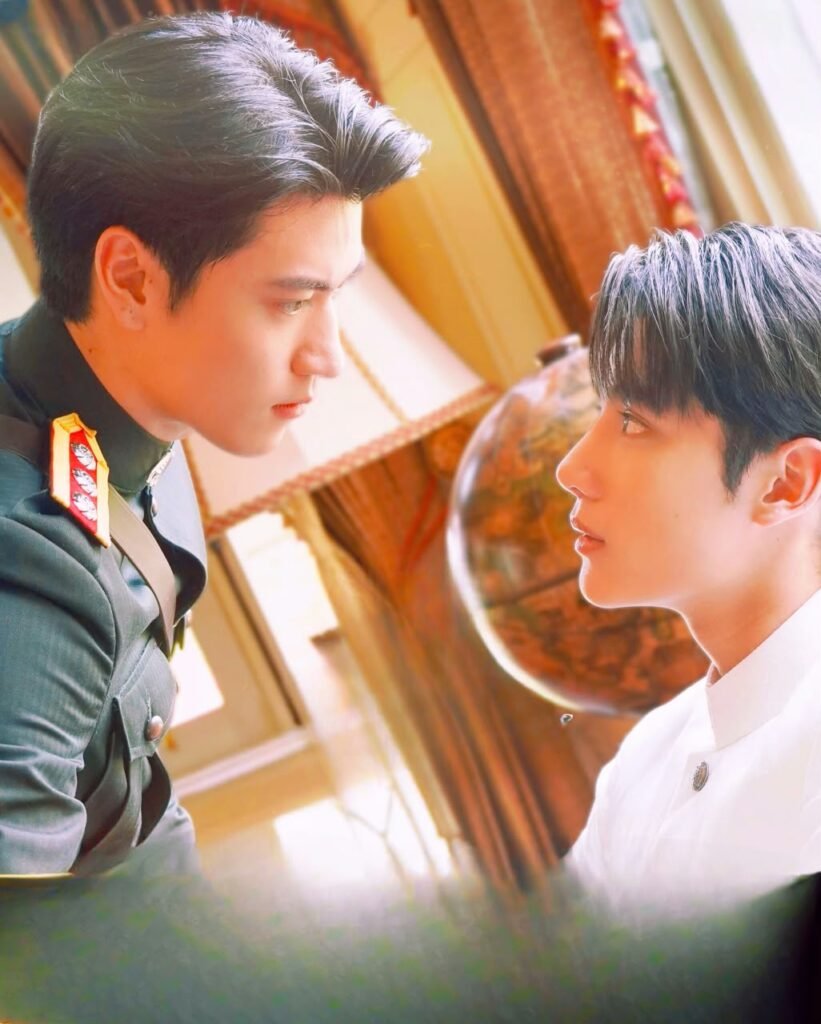
Ever since I became a Boys’ Love (BL) drama fan, something shifted within me. I found myself completely lost in the beautiful, soft romanticism of these shows. For me, BL dramas are not just a passing entertainment trend. They taught me how to trust in love again and opened my eyes to the absolute depth and purity of unconditional affection.
The Misunderstood Genre & A Changing World
Sadly, many people still view BL dramas through a narrow, judgmental lens. They miss the pure, soulful connection that these stories carry at their core. But change is finally happening. People are starting to understand, accept, and appreciate the emotional maturity of these narratives. It took a long time for society to adapt to this shift, but seeing this acceptance bloom feels like a personal victory for every fan out there. BLTalk became a place for me to talk about BL dramas, share my thoughts, and express the feelings these stories bring out in me.
Yet, as the world becomes more progressive, my mind often wanders into the shadows of the past. I frequently found myself stuck with a heavy, lingering question: “What happened back then, when the world wasn’t this advanced? When there was no freedom, no social media and no legal support for love? Did those people have to forcefully erase their true love from their hearts? How did they survive that silent, aching pain? Did they scatter away into unhappy arrangements, or did they live their entire lives completely alone?”
These thoughts honestly used to break my heart. I tried making up answers just to comfort myself, but my heart remained restless. The closure felt incomplete.
And then, The Edge of Horizon came into my life. It felt like this BL drama had arrived just to become a little piece of peace for my heart.When everything in my life felt scattered, and the lack of closure left me with this strange restlessness, this show came along and somehow held my hurting heart together. Tinnakorn and Phob’s story became more than just a drama for me. It became a kind of healing.
Watching their deep, quiet love for each other felt like someone was finally understanding the pain I had been carrying inside. Their relationship wasn’t loud or perfect. There was so much left unsaid, so many emotions hidden behind their eyes, and somehow that made it feel even more real to me.
When I had truly lost the feeling of peace in my heart, the emotional scenes and the honesty in their eyes somehow made me feel calm again. There were moments when I wasn’t even thinking about my own problems anymore. I was simply watching them, feeling their emotions, and letting myself get lost in their story for a while.
This series taught me that sometimes closure doesn’t come from the outside. Sometimes, you have to find it within yourself. And sometimes, you find a little bit of that peace in another person too—the same way Tinnakorn and Phob found a sense of comfort in each other’s hearts, even in the middle of all the chaos, pain, and revolution surrounding them.
It might be for that reason that The Edge of Horizon had such a strong effect on me. I was not merely watching yet another romance being played out on my screen; I felt a sense of understanding from Tinnakorn and Phob, which helped me when my mind at the time was full and exhausted. Each time things around me seemed overwhelming, I could go back to their story and, for a short time, forget about the burden I was carrying.
That is probably the reason why some drama BL become so close to us. We might initially start watching them because of the characters, the romantic element, or just because the story attracts us. Yet at times we begin to associate our own emotions with what we are seeing without even realising it. After the drama has ended, these feelings do not simply vanish. It can happen that a particular scene, a character, or even a minor moment will suddenly make all of it come back to us.
To me, Tinnakorn and Phob became that. I didn’t just watch their story and then move on from it; it became linked with a specific chapter of my life, which is why it still has such a special place in my heart.
The Edge of Horizon (also known as Arun Rung) came into my life. Set against the turbulent, historic backdrop of the 1932 Siamese Revolution, this Thai BL masterpiece adapted from the popular web novel follows the breathtaking yet heartbreaking story of Prince Tinnakorn (played by Ongsa Theetat) and Phob (played by Inn Jakkrasin), the nursemaid’s son. Directed by Oh Kathadeb and produced by One31, the narrative perfectly dissects a love divided by royal duty, rigid class hierarchies, and historical upheaval everything society forbade.
One of the things that I like most about The Edge of Horizon is that, despite the vast differences between them in terms of status and wealth, Phob (Inn Jakkrasin) and Prince Tinnakorn (Ongsa Theetat) never seem to view each other as more than a pair of individuals who cannot imagine living without the other. This brilliant subversion of the traditional class-divide trope protects the purity of their romance; rather than internal doubt tearing them down, it is entirely the world around them and the intense socio-political barriers of the era—that endeavors to keep the two men apart.
Honestly, Tinn’s story is the perfect example of where endurance and actual change come from. Sometimes you just have to break away from everything you’ve ever known to figure out who you are. And that’s exactly where he’s stuck. He’s completely torn between the only life he’s ever known his family his loyalty to his country and this guy he’s suddenly falling for. He’s basically had it drilled into his head his whole life that his family’s fate and the system rest on his shoulders. He used to genuinely believe in all those rules, but now? He’s finally starting to question the actual motives behind it all
What makes The Edge of Horizon so heartbreaking is not just the conflict between Phob and Tinn, or how hard their path to a happy ending turns out to be. The deeper sorrow stems from how the story depicts change, equality, power, and the pressure to fit in.
Even when people strive for a better and more equal world, change can grow complicated once those involved start sacrificing their principles. Some people join a movement hoping to bring about change, only to end up craving power for themselves.
That is precisely what gives The Edge of Horizon such an emotionally heavy feel. The story implies that standing up to injustice is not always sufficient people must also take care not to turn into part of the very system they once hoped to change.
So for Phob and Tinn, the struggle is about far more than simply reaching their happily ever after. Their relationship unfolds in a world where love, equality, power, and social expectations are constantly colliding, which makes their journey all the more meaningful and painful.
The Edge of Horizon Ending Explained: Phob and Tinn’s Relationship
Phob never asks Tinn to choose between their love and the fight for change. Instead, he shows through his actions that Tinn and their relationship are worth fighting for, even when doing so comes at a personal cost. His love for Tinn becomes one of the reasons he is willing to stand against injustice and fight for a different future.
At the same time, Phob’s devotion is complicated. He is willing to challenge injustice when it threatens his chance to be with Tinn, but he is also willing to humble himself before the man he loves. Whether that makes his devotion completely healthy is open to interpretation, but it clearly shows how deeply Tinn influences Phob’s choices.
Phob is also not the only person responsible for the change happening in The Edge of Horizon. The rebellion is much bigger than his individual story. Other people are fighting for change for their own reasons, and the movement would continue even without Phob. Because the story follows his perspective so closely, however, his choices naturally feel like a major part of that larger struggle.
Phob and Tinn fight for a love that society refuses to accept easily, and that constant scrutiny becomes part of their struggle. For Phob, the conflict goes even deeper because he feels responsible for helping bring down a system that his community once valued.
His goal was never simply destruction. He wanted to change that system so he, Tinn, and others could live openly, express who they truly are regardless of social status, and love without being controlled by society’s expectations. But every time someone he loves suffers because of those changes, Phob begins to question whether his choices were worth the cost.
That is one of the most painful parts of Phob’s story in The Edge of Horizon: fighting for change becomes difficult when the future you wanted brings suffering before it brings freedom.
Phob never asks Tinn to choose between him and anything else. From the beginning, he makes it clear that their love is worth fighting for, even when that fight comes at a painful personal cost. His actions repeatedly show Tinn that he will remain by his side regardless of what he has to sacrifice.
Phob is willing to stand against injustice, especially when it threatens his relationship with Tinn. Yet his strength does not prevent him from showing complete humility toward the man he loves. He can fight against the world when necessary, but he can also set his pride aside for Tinn.
That contrast makes Phob and Tinn’s relationship in The Edge of Horizon so compelling: Phob’s love is expressed not only through resistance, but also through loyalty, sacrifice, and the willingness to surrender when it matters to him.
Tinn’s grandmother, Patthamapriya, is an unconventionally strong woman in The Edge of Horizon. Instead of forcing her will upon others, she learns to accept people for who they are and where they want to be in life.
Her strength comes from within, and she realizes that change cannot be forced; instead, it should be encouraged and supported. She also learns that trying to cut off potential sources of affection in life can lead to disaster, which is a poignant lesson for anyone who wants to understand the importance of following one’s heart. This series is a tear-jerker — a beautiful and heart-wrenching BL drama that will leave you thinking long after the credits roll.
The show’s blend of romance and social commentary, equality themes, and focus on universal emotions like love and compassion is sure to touch your heart. The Edge of Horizon is a must-watch for fans of the BL genre who want to experience a powerful and unforgettable love story that will stay with them long after they’ve finished watching it. If you want to watch this stunning series, you can find it on GagaOOLala.
What really impressed me, apart from the attractive historical background, was the writing and the visuals. All the elements were well combined without making the story seem unnecessarily complicated. The drama successfully blends romance, political conflicts, and the absurd aspects of aristocratic life.
As I was watching, I continually considered the distinction between being grateful to somebody and just going along with them because of their position. At some point, does gratitude become blind obedience?
This is particularly noticeable in the way Phob addresses Thinnakon; he always refers to him as “His Highness,” and Thinnakon never actually objects to this. Initially, it seems to be a straightforward result of their social statuses, but as their relationship progresses, the significance of those titles begins to diminish.
I really enjoyed the way the drama illustrated the complex relationship between a revolutionary and a sovereign since they come from entirely different backgrounds and their respective positions are meant to keep them apart. However, as the story progresses, you begin to see that those labels, in fact, don’t really explain what each person means to the other. That was, for me, one of the most interesting aspects of the drama.
What elevates director Oh Kathadeb’s production of The Edge of Horizon (Arun Rung) beyond standard melodrama is its deliberate, atmospheric use of the 1932 Siamese Revolution as a mirror for internal turmoil. By placing the romance between Prince Tinnakorn (Ongsa Theetat) and Phob (Inn Jakkrasin) during the literal transition from an absolute to a constitutional monarchy, the series shifts the stakes from a standard class-difference trope into an architectural clash of ideologies. The text treats the political rebellion not just as a background aesthetic, but as a structural catalyst
where Phob represents the forward-surging momentum of a changing nation, and the Prince embodies a beautiful, fading era. This duality is masterfully visualized in the contrast between the rigid, traditional court protocols and the clandestine, revolutionary meetings, giving the audience a rare historical BL that argues that personal liberation cannot exist without societal evolution.”
As I watched their journey unfold amidst the turning of an era, I finally found the answers to the questions that had been haunting me:
- Love never truly dies: Even when tradition and parental duty tore them apart, their love didn’t vanish. It remained alive in the stars in their eyes every time they looked at one another.
- Separation isn’t failure: Watching them deal with class oppression and political chaos taught me that even if history forced lovers to stay apart or live in solitude, their bond wasn’t a tragedy it was a monument of ultimate sacrifice. The series masterfully transitions from a standard forbidden romance trope into a profound exploration of historical trauma and resilience.
- The Horizon is where they meet: Just like the title suggests, the sky and the earth may look separate, but at the edge of the horizon, they become one.
I truly cannot praise The Edge of Horizon (Arun Rung) enough; it is by far one of the most amazing and top-quality Thai BL films we’ve had in recent years. The story excels in all areas: its retro style, the impressive historical locations, and the deep, beautifully heartbreaking longing between a prince and a commoner. The way the script is written is a true example of excellent pacing, as it deals with serious issues such as class differences and changes in national politics without in the slightest compromising the intense and passionate romance at its heart. Inn Jakkrasin and Ongsa Theethuch perfectly bring out the characters of Phob and Prince Thin, presenting us with a love story based on patience, sacrifice, and strong devotion. Each and every episode leaves you with a tightness in your chest due to the tension. It is a touching and unforgettable experience that stays with you long after the final credits have ended. There is no doubt that it should be at the heart of any discussion about the best BL productions of the year.
A Final Thought
The Edge of Horizon didn’t just give me an incredible cinematic experience with its stunning vintage aesthetics, period-accurate styling, and top-tier acting from Inn and Ongsa; it gave my restless thoughts a profound sense of peace. It validated the pain of every silent lover who lived in the decades before us, assuring me that their love was never wasted. It was real, it was pure, and it paved the way for the freedom we are beginning to see today.
To anyone who still looks down on this genre: I invite you to look past your biases. Whether you are streaming the uncut version on GagaOOLala or following the official OneD app broadcast, you might just find a story that heals a part of your heart you didn’t even know was aching.